Picta · Nonogram Puzzle
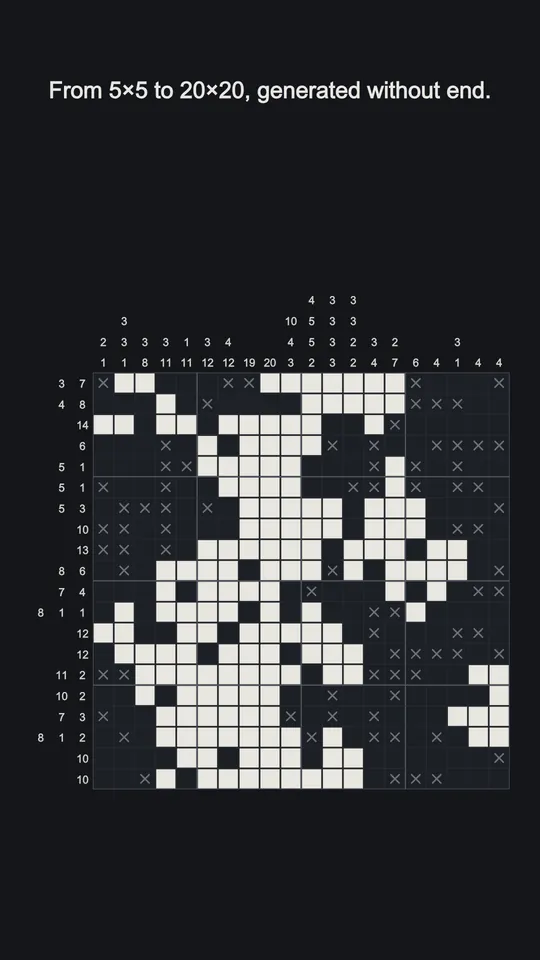
Nonograms proven solvable by deduction alone. Never a guess, from 5×5 to 20×20.

Nonograms that never ask you to guess.
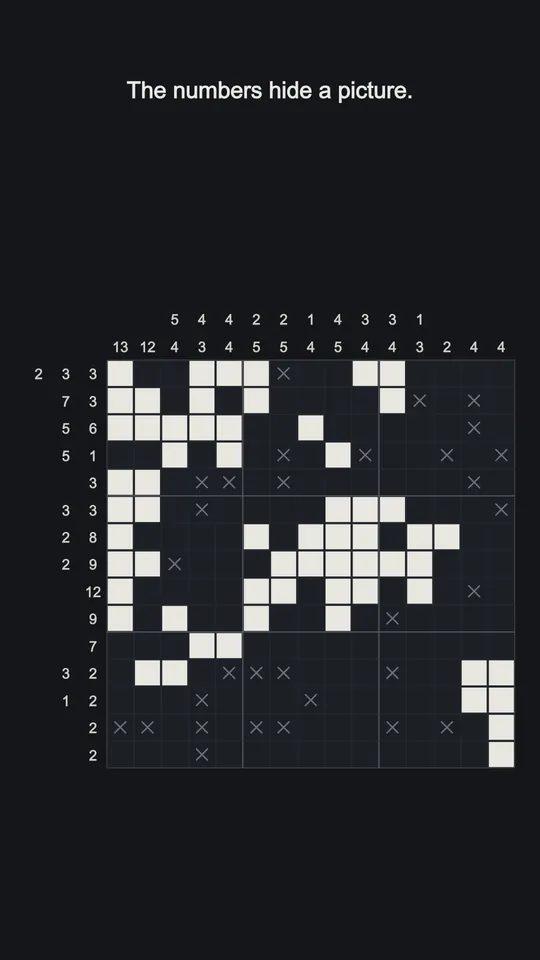
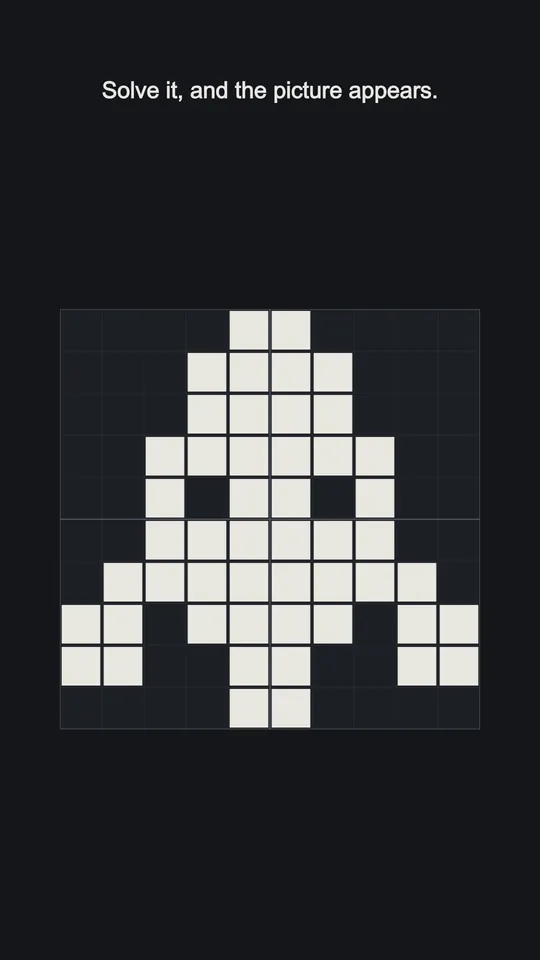
The numbers on each row and column tell you the blocks of filled cells. Work them out and a picture appears. What sets Picta apart is what it refuses to ship: every grid is checked by a solver allowed to reason only the way you do — line by line, never assuming — and any grid it cannot finish without guessing is thrown away. The one complaint players have about this genre, settled by construction.
Difficulty says what you will have to work out, not how big the grid is: a 10×10 can be harder than a 15×15. Drag to fill a whole run and the axis locks, so a wandering thumb never ruins a line, and one stroke is one undo rather than fifteen. Free mode says nothing when you are wrong; assisted mode refuses wrong squares at the cost of one of three mistakes — you choose per grid. A daily grid shared by everyone, a journey from 5×5 to 20×20, and an endless mode that never runs out.
Key features
Never a guess
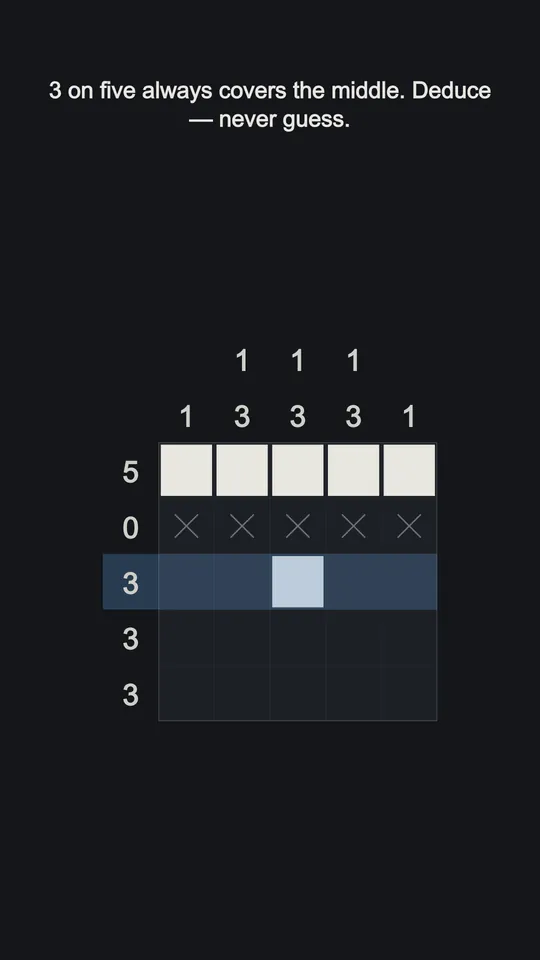
A solver that may only reason line by line checks every grid. If it cannot finish without guessing, the grid is discarded.
Difficulty that means something
The level measures the reasoning a grid demands, not its size. A 10×10 can be harder than a 15×15.
Made for one thumb
Drag to fill a whole run — the axis locks. One stroke is one undo, and pinch to zoom keeps the clues pinned to the edges.
Two ways to play
Free mode leaves your mistakes standing. Assisted mode refuses wrong squares, at the cost of one of three errors.
Daily and endless
One grid a day, the same for everyone, a journey from 5×5 to 20×20, and an endless generator behind it.
Yours alone
Entirely offline. No account, no sign-up, no leaderboard — your progress lives on your device.
See it in action
Ready to play?
Download Picta · Nonogram Puzzle for free on Google Play.
Discover more
Pixmory: Photo Memory Game
Puzzle & Memory
Turn your own photos into a memory game: 7 modes, 2 to 4 players, offline and free.
Gomoku XXL
Strategy & Logic
Gomoku on giant boards: 10×10, 15×15 and 20×20 grids, against the AI or online multiplayer.
Gravix: Gravity Puzzle
Puzzle
Flip gravity, solve brain teasers and master hundreds of levels!